
You are here >> Home >> Algernon Firth
Algernon Firth Building
- Sir Algernon Firth, Baronet 1856-1936
- Born on the 15th September 1856, the son of T.F. Firth, at Holme House, Lightcliffe.
- Sir Algernon joined the family carpet manufacturing business, T.F. Firth and Company, and became Chairman until his retirement in 1921 when the company was taken over by Sir William Akroyd, thus ending the Firth family connection.
- In 1881 he married Janet Gertrude Lindsay and they had one daughter, Dorothy Gertrude. The marriage was not blessed with a son and the Baronetcy became extinct upon his death.
- Sir Algernon and Lady Janet became generous benefactors to the local area, erecting a war memorial, contributing generously in 1889 to displaced Irish tenants evicted from their homes in Ireland and in 1911 donated the George V park and a drinking fountain to the people of the local area at Bailiff Bridge in Yorkshire.
- Sir Algernon made a significant impression in the area and was President of the local Liberal Association, President of the Chamber of Commerce until 1918 and was High Sheriff of Yorkshire 1922-1923.
- Upon retirement he left Holme House to live at Scriven Park in Knaresborough until his death. It is said that people were seen weeping in the streets, such was the depth of feeling for him and his charitable works.
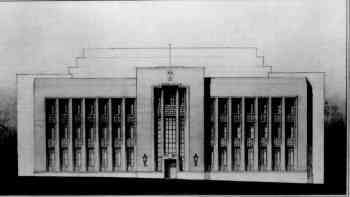
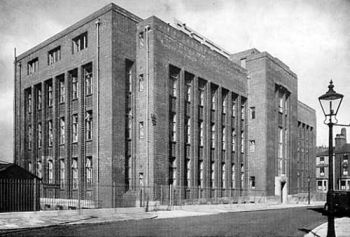
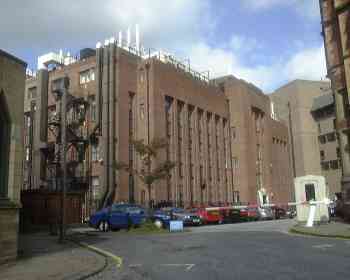
- Sir Algernon commissioned the Algernon Firth Institute of Pathology, St. George's Road, Leeds General Infirmary, which was designed by the local architect John C. Proctor. It is probably the earliest example of using reinforced concrete in a civilian building.
- The Institute was opened by Sir Algernon in 1933
Architect's drawing 1933
1930s
1997
1930s image by kind permission of
Leeds Library and Information Services, www.leodis.net
1997 image courtesy of Steve Toms



|